 Business License

PTFE Semi-permeable Membrane Aerobic Fermentation of Domestic Waste to Produce Organic Fertilizer
PTFE Semi-permeable Membrane Aerobic Fermentation of Domestic Waste to Produce Organic Fertilizer
1. Brief Introduction
PTFE semi-permeable membrane aerobic composting is a clean recycling technology for classified organic domestic waste including kitchen leftovers, fruit and vegetable residues, garden trimmings. It converts biodegradable domestic waste into qualified commercial organic fertilizer via enclosed aerobic fermentation, overcoming defects of conventional open compost such as odor overflow, rain-induced leachate, serious nutrient loss and weather-restricted production.
2. Working Principle
The core material is expanded PTFE composite microporous membrane with 0.1–0.3 μm aperture and textile reinforcing layers for mechanical strength:
Small-molecule water vapor and CO₂ produced by microbial degradation penetrate outward to drain excess moisture inside piles and prevent anaerobic putrefaction.
Large-molecule odorous gases (NH₃, H₂S, VOCs), germ-containing mist and fine dust are blocked inside the pile to control odor pollution.
The covered structure retains biological heat from microbes, maintaining stable thermophilic temperature of 55–70 ℃ for over 7 consecutive days to kill pathogens, parasite eggs and weed seeds to achieve harmless treatment.Bottom forced aeration continuously supplies oxygen to sustain vigorous aerobic microbial activity.
3. Complete Production Process
3.1 Raw material pretreatment
Sort domestic waste to remove inorganic impurities like plastic, glass and metal; crush organic fractions, mix with straw, sawdust or bran to regulate moisture to 55%–65% and C/N ratio at 25:1~30:1.
3.2 Pile construction and membrane covering
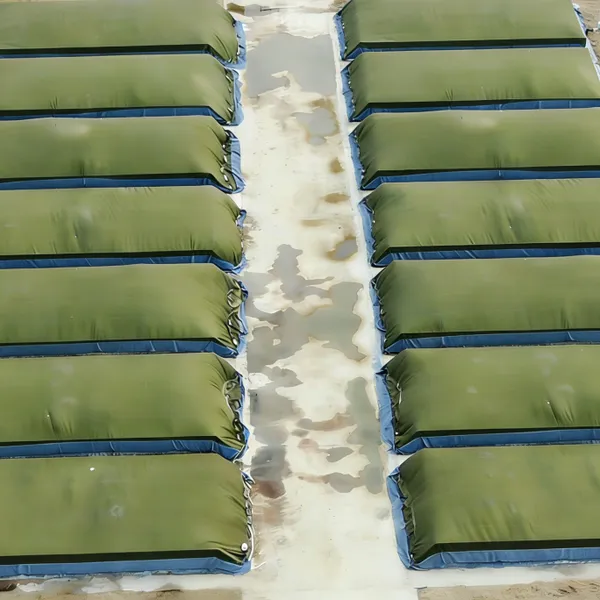
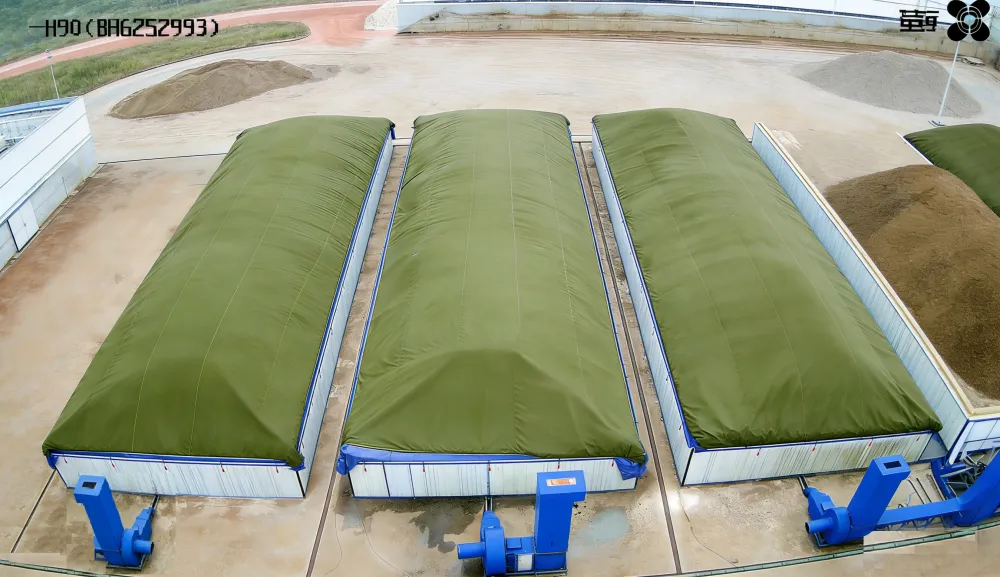
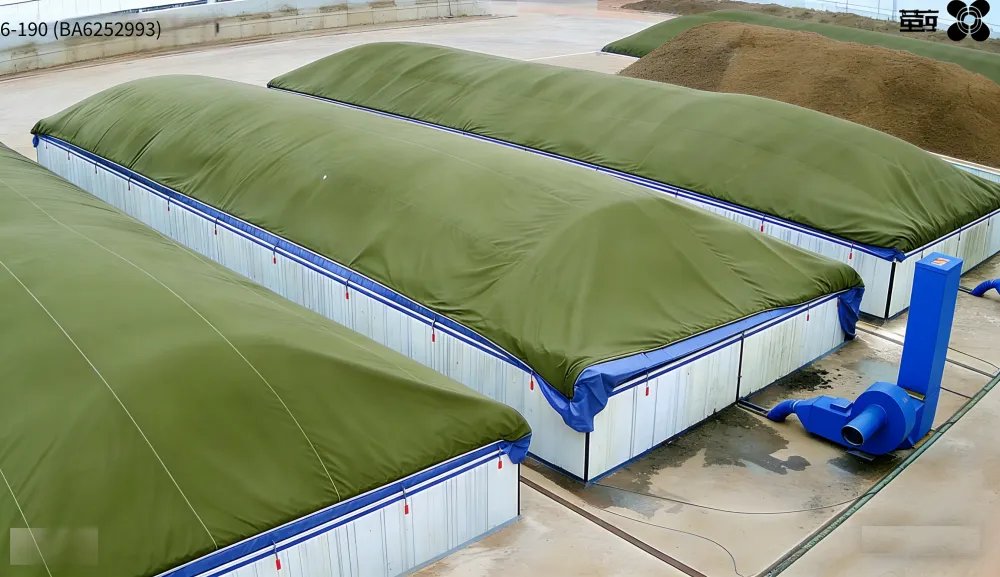
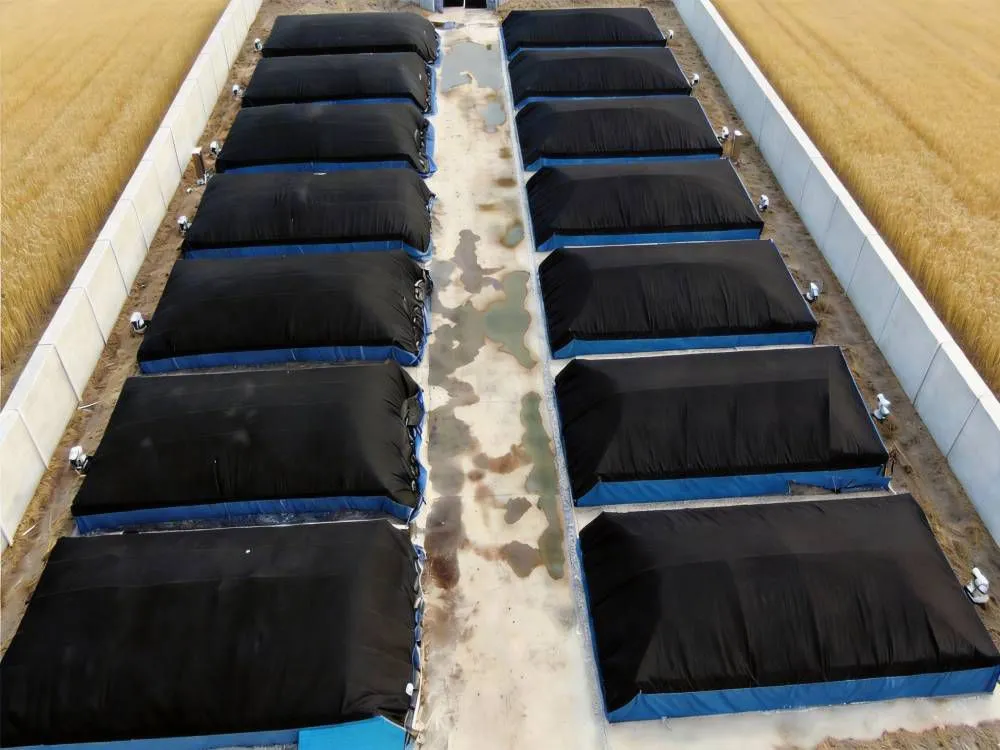
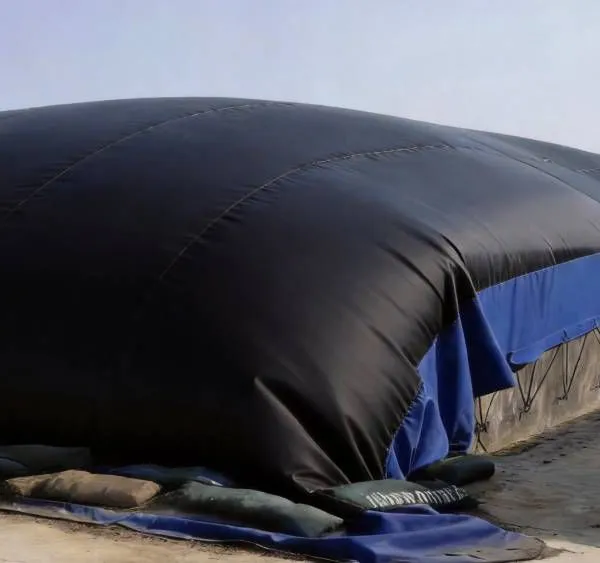
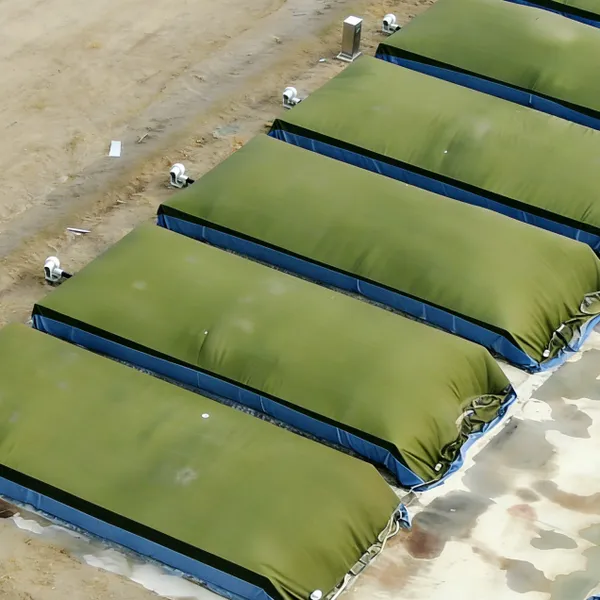
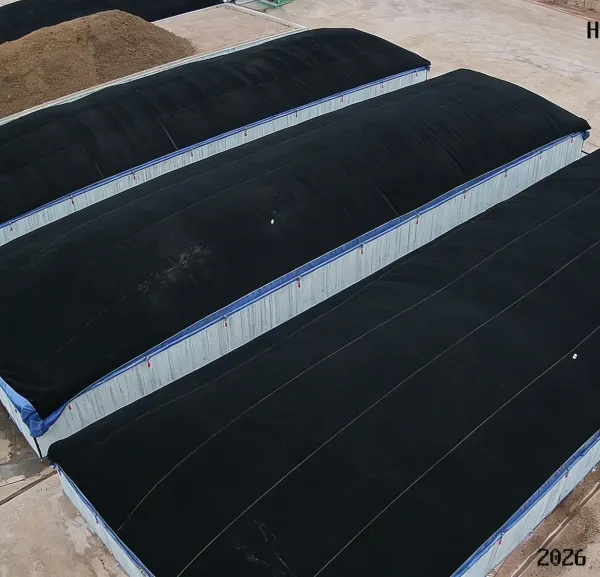
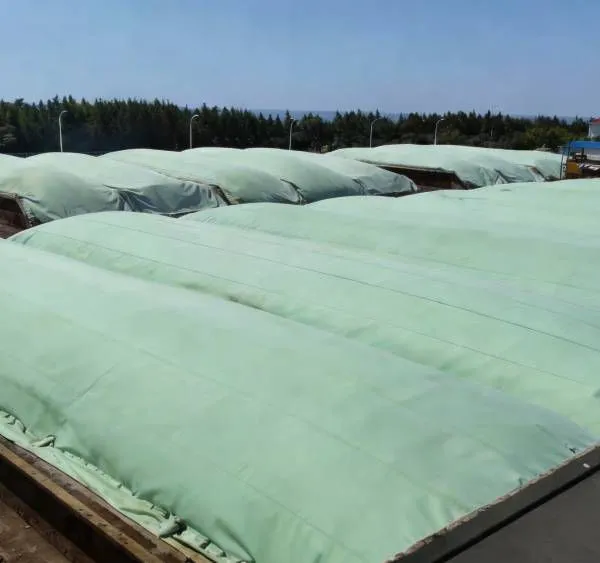
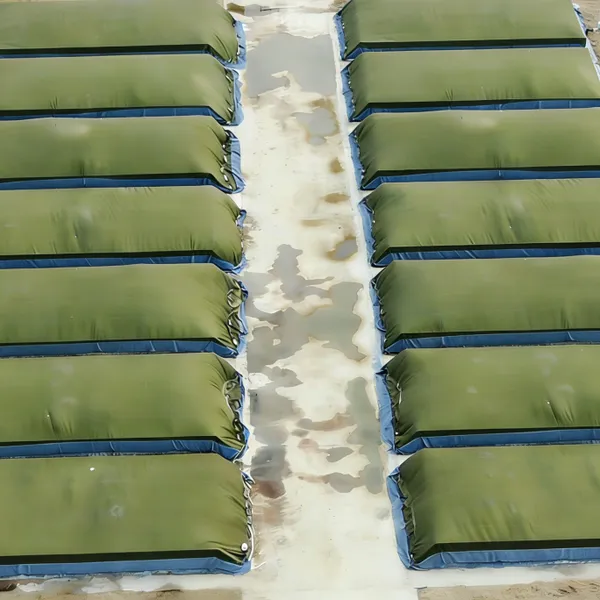
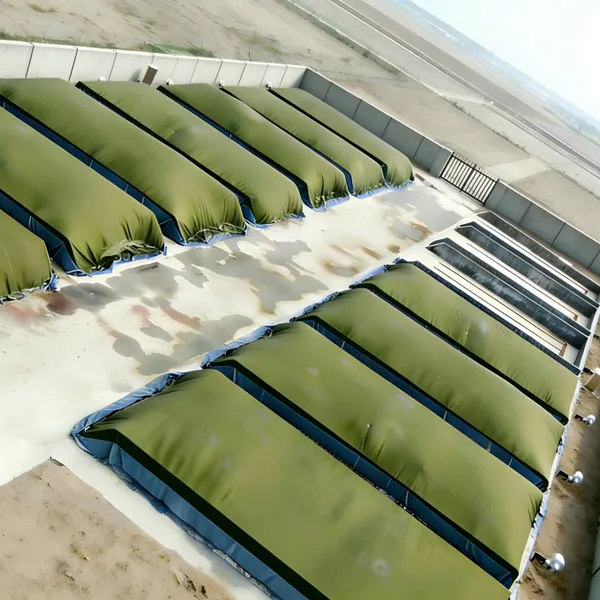
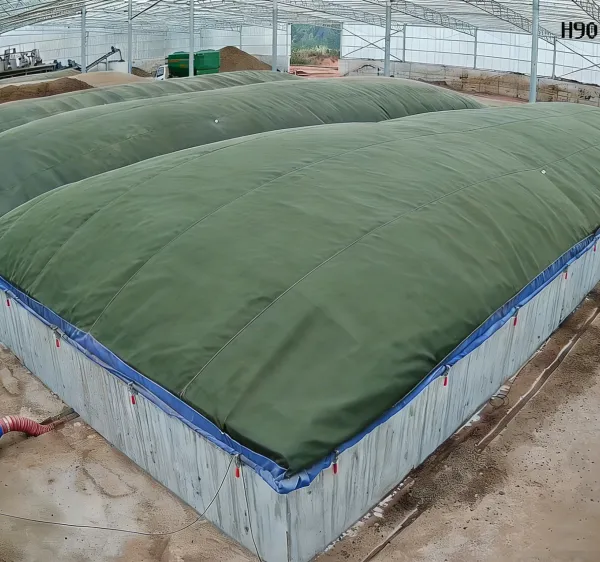
Build strip compost piles above pre-laid aeration pipelines, then fully seal the whole pile with fixed PTFE semi-permeable membrane to form an enclosed fermentation space.
3.3 Controlled aerobic fermentation
Intelligent aeration system automatically adjusts air supply according to real-time pile temperature, oxygen content and humidity. No frequent pile turning is needed. The whole fermentation cycle lasts 20–32 days, much shorter than traditional open compost (60–90 days).
3.4 Aging and fertilizer finishing
After high-temperature fermentation, materials undergo aging maturation. Mature compost is crushed, screened and optionally granulated into powdered or granular organic fertilizer conforming to relevant national standards.
4. Technical Advantages
Environmental protection: More than 95% odor interception; rainwater isolation avoids leachate generation and soil/water contamination.
High resource efficiency: Waste volume reduces by 45%~60%, nitrogen volatilization loss drops sharply for higher organic matter and nutrient content of finished fertilizer.
Cost saving: Cancel regular turning work to cut labor and machine costs; PTFE membrane is corrosion-resistant, anti-aging with long service lifespan.
All-weather production: Runs stably under rainy, low-temperature or high-temperature conditions, suitable for community and village decentralized waste treatment.
5. Application Prospect
Widely used in residential communities, rural villages, farmers’ markets and small domestic waste transfer stations. Supported by garbage classification and circular agriculture policies, this technique realizes domestic waste reduction, harmlessness and resource reuse, with promising popularization value.
I. Company Introduction
Qingdao Jiguang Environmental & Energy Technology Co., Ltd. (hereinafter referred to as Jiguang Technology) was established on January 30, 2019 and is located in Laoshan District, Qingdao. Since its establishment, the company has been committed to the R & D, technical optimization and promotion of China's "membrane-covered fermentation technology". It has successively reached cooperation with nearly 100 enterprises and institutions such as New Hope Liuhe, Yili, Changchun Agricultural Machinery Research Institute, Agricultural Expo Park, Nanjing Tech University, etc., and is responsible for the implementation of projects. During this period, a total of more than 1,200 sets of equipment have been promoted, installed and debugged, and projects in Malaysia and the Philippines have also been implemented. Through nearly 6 years of technical promotion and application, the "membrane-covered fermentation technology" has become a widely accepted aerobic fermentation technology in China. With its technical characteristics of low investment, simple operation, low energy consumption and "zero" maintenance, it has been widely used in China and is being promoted as a key agricultural technology in various places.
Scope of application: Livestock and poultry manure (chicken manure, pig manure, cow manure, duck manure), sludge, domestic waste, straw waste, etc.
System composition: e - PTFE composting membrane ·· Intelligent control system ·· Micro - pressure air supply system ·· Monitoring system
II. Technology Introduction
The e - PTFE membrane - covered aerobic composting technology adopted by Jiguang Technology is a process technology that uses a special functional membrane as a covering for the aerobic fermentation treatment of pig manure. The core of this process technology is a functional membrane with special micropores. Its semi - permeable function can achieve a relatively constant climate environment. Under the action of blowing air, a micro - high - pressure inner cavity can be formed in the fermentation body, making the oxygen supply of the pile uniform and sufficient, and the temperature distribution uniform. It creates a suitable environment for aerobic fermentation. Water vapor and carbon dioxide can diffuse out through the microporous structure of the functional membrane, maintaining the air flow balance inside and outside the fermentation pile membrane, ensuring more thorough aerobic fermentation and effectively killing pathogenic microorganisms to ensure the hygienic level of the fermented products.
III. Process Features
1. Environment - friendly, no odor emission.
2. Simple operation, intelligent and unattended.
3. Low energy consumption. It uses low-voltage and low-energy-consuming fans to operate intermittently. It only costs 7 yuan in electricity to ferment one ton of organic fertilizer.
4. "Zero" failure, no need for maintenance, and simple system.
5. High product quality. Through long-time high-temperature fermentation, the organic fertilizer has a high degree of decomposition and good sterilization.
Recently Posted
-
ePTFE semi-permeable membrane aerobic fermentation of domestic waste into organic fertilizer GG
June 12, 2026ePTFE semi-permeable membrane aerobic fermentation of domestic waste into organic fertilizerEnglish VersionThis paper focuses on t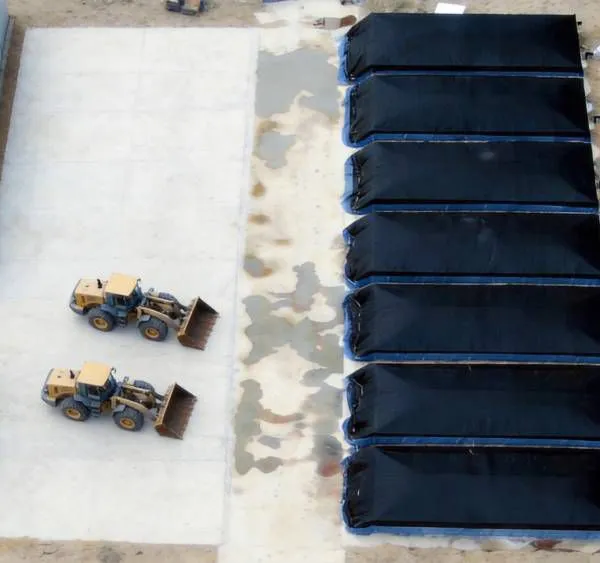 Read More
 -
USE ePTFE semi-permeable membrane aerobic fermentation of domestic waste into organic fertilizer
June 12, 2026ePTFE semi-permeable membrane aerobic fermentation of domestic waste into organic fertilizerEnglish VersionThis paper focuses on t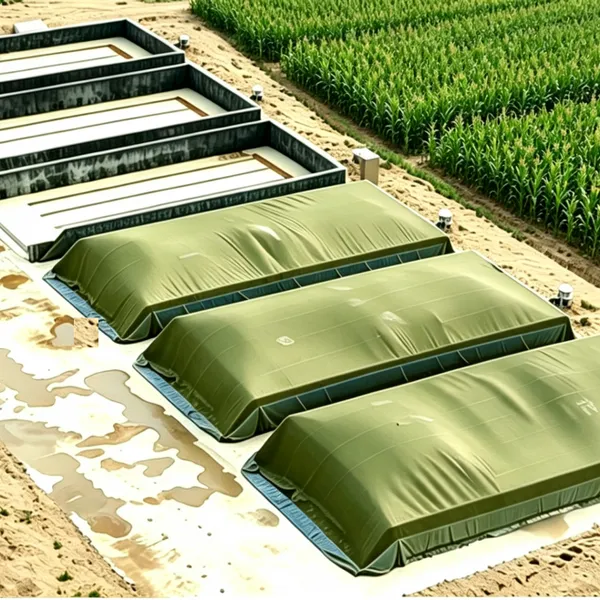 Read More
 -
gegood ePTFE semi-permeable membrane aerobic fermentation of domestic waste into organic fertilizer
June 12, 2026ePTFE semi-permeable membrane aerobic fermentation of domestic waste into organic fertilizerEnglish VersionThis paper focuses on t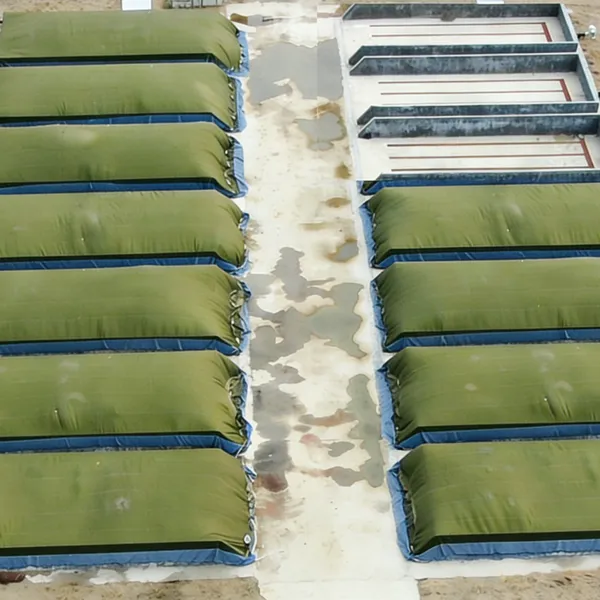 Read More
 -
ePTFE semi-permeable membrane aerobic fermentation of domestic waste into organic fertilizer gegood
June 12, 2026ePTFE semi-permeable membrane aerobic fermentation of domestic waste into organic fertilizerEnglish VersionThis paper focuses on t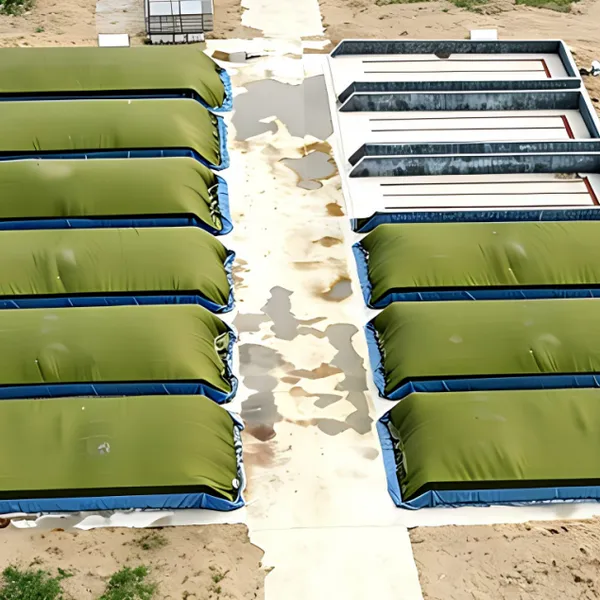 Read More

Contact Us
Recommended Products
-
 Gegood Fermentation of Household Waste Using PTFE Semi-permeable Membrane for Treatment CoverUS$ 5000MOQ: 1 Set
 -
Ferment Organic Fertilizer From Household Waste Using PTFE Semi-permeable Membrane of CoverUS$ 5000MOQ: 1 Set
-
Gegood Fermentation of Household Waste Using PTFE Semi-permeable Membrane for Treatment CoverUS$ 5000MOQ: 1 Set
-
Cover Gegood Fermentation of Household Waste Using PTFE Semi-permeable Membrane for TreatmentUS$ 5000MOQ: 1 Set
-
Aerobic Fermentation of Domestic Waste Using PTFE Semi-permeable Membrane of Gegood CoverUS$ 5000MOQ: 1 Set
-
Cover Gegood Fermentation of Household Waste Using PTFE Semi-permeable Membrane for TreatmentUS$ 5000MOQ: 1 Set
-
Ferment Organic Fertilizer From Household Waste Using PTFE Semi-permeable Membrane of CoverUS$ 5000MOQ: 1 Set
-
Cover Gegood Fermentation of Household Waste Using PTFE Semi-permeable Membrane for TreatmentUS$ 5000MOQ: 1 Set
-
PTFE Cover Semi-permeable Membrane Fermentation of Organic Fertilizer From Household WasteUS$ 5000MOQ: 1 Set
-
Gegood Cover Fermentation of Household Waste Using PTFE Semi-permeable Membrane for TreatmentUS$ 5000MOQ: 1 Set
-
Ferment Organic Fertilizer From Household Waste Using PTFE Semi-permeable Membrane Cover of GegoodUS$ 5000MOQ: 1 Set
-
Cover Fermentation of Household Waste Using PTFE Semi-permeable Membrane for TreatmentUS$ 5000MOQ: 1 Set
-
Gegood Ferment Organic Fertilizer Using PTFE Semi-permeable Membrane CoverUS$ 5000MOQ: 1 Set
-
Ferment Organic Fertilizer Using PTFE Semi-permeable Membrane Cover go reUS$ 5000MOQ: 1 Set
-
Aerobic Fermentation of Domestic Waste Using PTFE Semi-permeable Membrane go re CoverUS$ 5000MOQ: 1 Set
-
Ferment Organic Fertilizer Using PTFE Semi-permeable Membrane CoverUS$ 5000MOQ: 1 Set
-
Gegood Fermentation of Household Waste Using PTFE Semi-permeable Membrane for Treatment CoverUS$ 5000MOQ: 1 Set
-
Fermentation of Household Waste Using PTFE Semi-permeable Membrane Cover for TreatmentUS$ 5000MOQ: 1 Set
-
Gegood Cover Fermentation of Household Waste Using PTFE Semi-permeable Membrane for TreatmentUS$ 5000MOQ: 1 Set
-
Gegood Ferment Organic Fertilizer Using PTFE Semi-permeable Membrane CoverUS$ 5000MOQ: 1 Set